
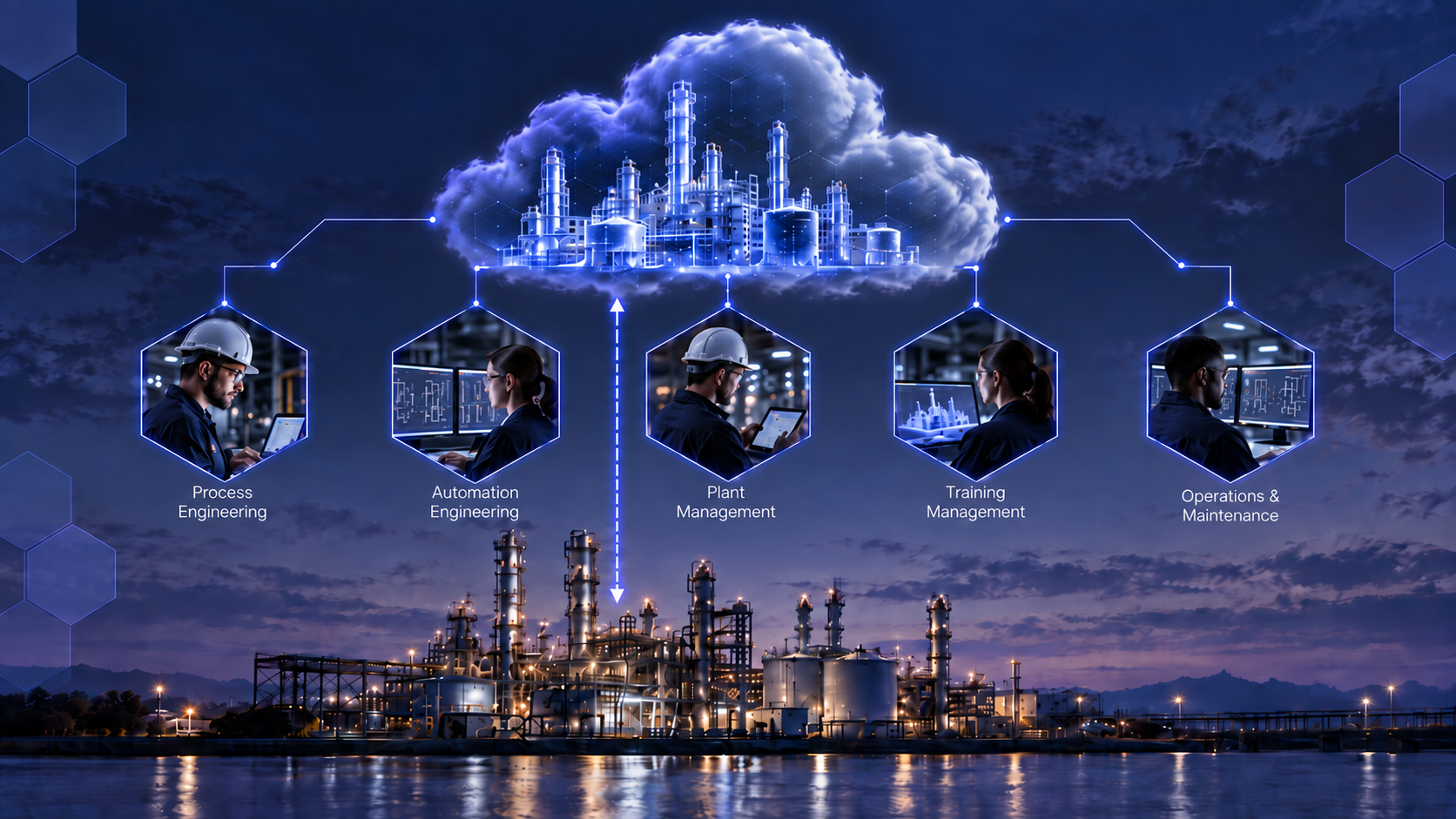

Growing operational complexity and pressure to improve performance mean process manufacturers have a greater need than ever to optimize plant performance. Across industries, many teams first use digital twins as project assets to validate engineering and automation designs, test configurations, and prepare operators before startup.
Those use cases alone can deliver significant value before a project reaches production. But clients who get the most from their simulation investment continue using those same dynamic models well after commissioning and startup. With the right strategy, a Multi-Purpose Dynamic Simulator (MPDS) can evolve from a project tool into a shared sandbox for process engineering, automation, operations, training, and plant management. In this blog, we’ll look at the common project use cases first, then how teams can extend simulation across the plant lifecycle.
Three Common Digital Twin Use Cases
Digital twins are still primarily deployed as discrete project assets, with the most common usage being engineering design, development and testing, and operator training. Although each use case can deliver value on its own, using a common simulation environment across these phases gives process, automation, operations, and training teams a single source of truth for design reviews, testing, and alignment before any changes reach the plant.
1. Engineering Design
In the earliest stages of project design, a digital twin can support Design Acceptance Testing (DAT), helping teams evaluate and align on process and automation design before the automation system is fully specified. Instead of accepting the design through static drawings and specifications alone, DAT provides stakeholders with a working model they can use to test assumptions and see how the design behaves. Bringing process engineering, automation, operations, and maintenance into early reviews helps you build a shared ‘source of truth’ and helps surface potential challenges while still in the design phase. No project team wants to find surprises during FAT that originated in design; moving these discoveries upstream can reduce costly rework and protect by our project schedule.
2. Automation Development and Testing
A digital twin can serve as an Automation Development and Test environment throughout project execution, giving teams a safe place to build, test, and refine automation configurations before they are deployed to production. As the project advances, that same environment can support virtual commissioning and startup by allowing automation engineers and operators to run through sequences, procedures, and abnormal conditions repeatedly. Finding and correcting issues in this environment reduces late-stage surprises and can shave weeks to months off commissioning and startup.
3. Operator Training
Empower operators using digital twins to provide hands-on experience with a virtual system that looks, feels, and responds exactly like the control system they will use in production. Because the digital twin is completed early in project development, an Operator Training System can be put into practice well before startup. More rigorous dynamic models also enable you to prepare operators for abnormal situations like plant trips, startups and shutdowns they aren’t likely to experience in their day-to-day operations. In addition, developing practice scenarios in conjunction with senior operators allows you to capture operating and control nuances that take years to learn—before your most experienced operators retire.
Putting It All Together: Multi-Purpose Dynamic Simulation
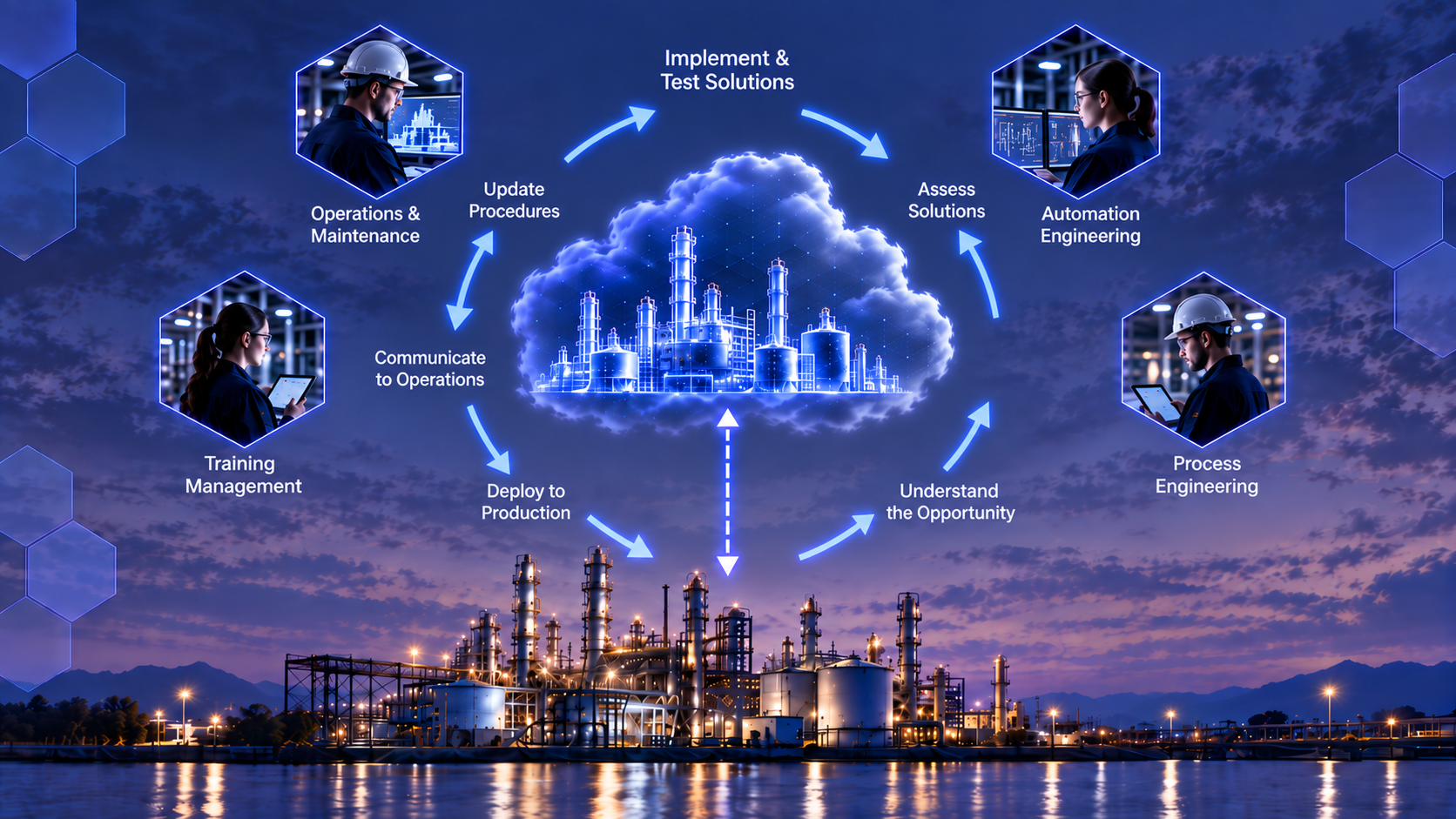
Engineering design, development and testing, and operator training are often treated as separate simulation use cases. Multi-Purpose Dynamic Simulation uses the same dynamic model across activities and projects and continues to add value after startup. Instead of passing the baton between disconnected tools and teams, the simulation model becomes a shared sandbox connecting process engineering, automation engineering, operations, training, and plant management.
This is where simulation becomes part of continuous improvement. Teams can use the model to understand an opportunity, evaluate potential solutions, test changes, update procedures, train operators, and prepare for deployment before touching production. The same environment then becomes available for the next improvement project — creating a repeatable workflow rather than a one-time project deliverable.
Additional Lifecycle Use Cases
Operational Performance Improvements
After project completion, the digital twin is often shelved. However, dynamic simulation models also enable operations teams to experiment with new equipment, strategies, and configurations to boost performance without disrupting normal plant operations. The simulation becomes a sandbox where teams can recreate operating challenges, understand how the process and automation are interacting, and evaluate potential improvements before making changes in production.
That ability to understand the problem first is important. What initially looks like an automation issue may be process-driven, and a seemingly straightforward process change may have unintended consequences elsewhere. Simulation gives cross-functional teams a common environment to explore those interactions, test assumptions, and build
confidence in a solution before implementation
Hazard and Cost-Benefit Analysis and Advanced Control
Using a digital twin can also help safely identify the potential causes of process hazards. After developing a deeper understanding of what occurred, automation and process engineers can determine whether they should automate, change, or create new operational processes to prevent future safety incidents. Simulation can also be used to perform cost-benefit analysis; identify the safest way to implement solutions in the field; document changes to operating procedures; and effectively train operators on those new procedures. When cross-functional teams use the same comprehensive solution to identify, test, and train, deployment to production becomes more predictable and lowers project risks. The same simulated collaboration environment can also be used for debottlenecking, testing new control strategies, and other continuous improvement initiatives.
System Ownership and Model Maintenance
One of the most common mistakes in project planning is failing to identify ownership of a digital twin. Maintaining a modern digital twin rarely sits neatly within one discipline: the environment can span the process model, automation configuration, simulation software, virtualization, networking, and other IT/OT infrastructure. At the same time, keeping the model current is rarely anyone’s full-time responsibility. As production changes accumulate, the model drifts from reality. Teams trust it less, use it less, and therefore invest much less effort in keeping it current. Unfortunately, this type of negative feedback loop can quickly turn a valuable system into shelfware.
A lifecycle simulation strategy helps counter this problem because the digital twin is being used as an integral part of a plant’s improvement workflow. When teams use the model to evaluate changes, test updates, train operators, and prepare deployment, updating the digital twin becomes part of implementing any changes rather than a separate maintenance exercise. Clear ownership and a defined synchronization process are still important, but regular use helps keep the model relevant.
Not every organization has the resources or cross-domain expertise to manage this process internally. That’s why we created a solution that combines our simulation, automation, and IT/OT expertise with proprietary tools that help us automate portions of the model update. Onyx 360 Managed Solutions provide you with flexible maintenance options that take into account the complexity of your simulation environment, frequency of production changes, and simulator usage. Planned lifecycle maintenance allows your engineers to spend less time maintaining your digital twin and more time using it to drive value.
Capitalizing on the Full Value of a Digital Twin
Clients across industries and around the globe are using dynamic simulation to ensure accuracy, decrease risk, and improve scheduling during project execution. However, with the right simulation partner, clients can extend from project to lifecycle benefits with a digital twin that helps teams improve safety, operational certainty and plant performance throughout your plant or across multiple sites. With a proper lifecycle strategy, implementation, and training, simulation models can also act as a collaboration sandbox and a powerful resource for continuous improvement—supporting operational flexibility and providing your organization with a true competitive advantage.
Talk to an Onyx 360 expert to learn more.